
What Your Doctor Never Checks Before Your PRP Procedure
If you are preparing for PRP, platelet-rich plasma, or any regenerative therapy for your back or neck, there is something most patients are never told. And it can shape whether the treatment does what you hoped it would.
I am Dr. Myrdalis Díaz-Ramírez. I have spent 25 years in pain management and more than a decade in regenerative medicine. In that time, I have learned that the outcome of a procedure is not decided by the treatment alone. It is also decided by what your body has on hand to work with.
Let me explain, because this is not a detail. It may be one of the most important things you can address before your procedure.
The Data Most Patients Never Hear
Research published in the Journal of Bone and Joint Surgery, one of the most respected orthopedic journals in the world, identified nutritional status as the single strongest predictor of complications after a procedure. Not fourth on the list. First. Ahead of smoking, ahead of diabetes, ahead of obesity.
And here is the part that concerns me: research suggests that fewer than half of patients are nutritionally optimized when they arrive for their procedure. That means most people are walking in carrying a risk that no one screened for.
Why “I Eat Enough Protein” Is Not the Whole Story
When most patients hear the word nutrition, they think, I eat enough protein, so I am fine. I understand why. But there is a piece missing.
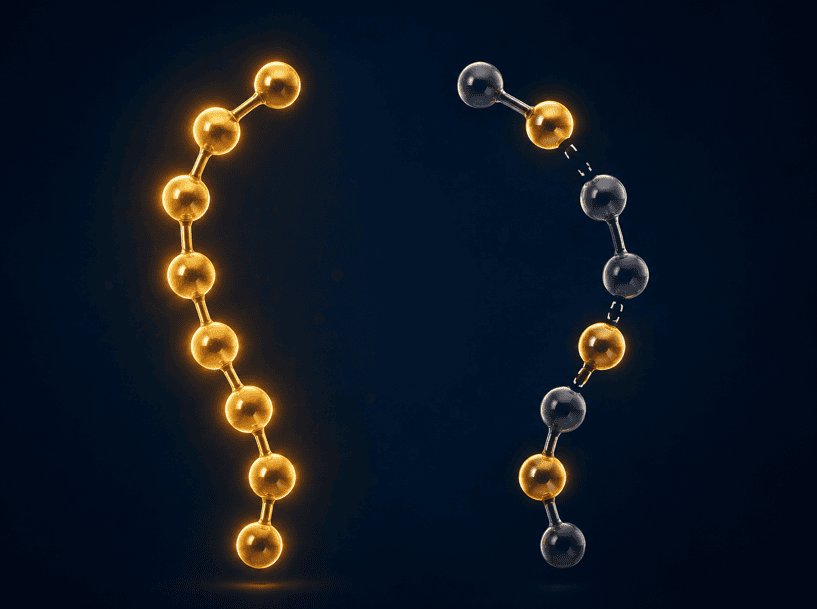
Protein is made of 20 amino acids. Your body can make 11 of them on its own. The other nine, the essential ones, can only come from what you eat. If you are short on those nine, your body cannot fully use the protein you are already eating.
A chain is only as strong as its weakest link. Miss the essential amino acids, and the protein cannot do its job.
This matters even more today. With so many people eating less while taking GLP-1 medications for weight or blood sugar, the gap between what the body needs and what it receives can be even wider.
Think of It Like a Repair Crew
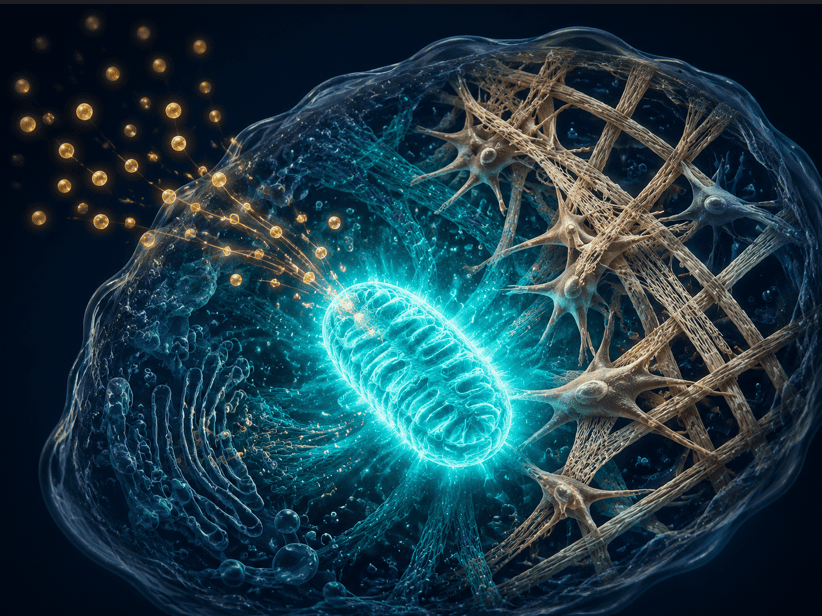
Here is how I explain it to my patients. A regenerative therapy works by triggering repair. It signals your cells to shift out of cleanup mode and into rebuilding mode. It stimulates the mitochondria, which are the tiny batteries inside your cells that power that work. Essential amino acids feed those very same processes.
So picture a repair crew arriving at a construction site. The treatment sends the crew. But the crew still needs supplies to build with. Essential amino acids are those supplies.
Now imagine sending that crew in with an empty truck. They show up ready to work, but they have nothing to build with. That is what many patients are missing when they arrive for a procedure: the building blocks. And no one prepared them for it.
What the Numbers Actually Show
In a Level 1 study, which is the gold standard of medical research, where groups are divided at random and as many variables as possible are controlled, essential amino acids were found to increase collagen formation by 67 percent compared to non-essential amino acids or protein alone.
Collagen is the main building material of tendons, ligaments, cartilage, and spinal discs. These are exactly the structures involved in the conditions I treat. And that study is more than 20 years old. This is not a trend. It is physiology that medicine is only now catching up to.
The Metabolic Dip
Here is something patients are rarely warned about. A procedure places real stress on the body, comparable to hard athletic exertion. Without nutritional support, many patients spend months simply returning to their starting point before they can even begin to improve. I call this the metabolic dip.
The right amino acid support, timed correctly, can close much of that gap. For many patients, that can mean feeling better in weeks rather than months.
If You Have Lived With Chronic Pain, This Matters Even More
If you have had back or neck pain for months or years, please pay close attention here. Chronic pain drives muscle loss. It also raises your metabolic demand. That means you are not starting at zero. You may be starting behind it.
For these patients, optimizing amino acids before a procedure is not really optional. I consider it an essential part of preparation.
And there is a bigger reason this matters. Skeletal muscle mass, which essential amino acids support directly, is one of the strongest predictors we have of longevity, of functional recovery, and of avoiding complications. This is not only about one procedure. It is about how we age.

A Note on Timing
Here is something most physicians in regenerative medicine do not know yet. There is early animal data suggesting that taking essential amino acids about one hour before a procedure may help platelet activation peak right when it is needed, which is the very thing we are concentrating in PRP.
That could make the treatment itself more effective. It is early data, and I treat it as early data. But it is exactly why we are building nutritional timing into our DR2SPINE Motion Method protocol, and not just focusing on the procedure itself.
What We Do Differently
So let me return to where I began. The one factor that can decide whether your procedure heals may not be the treatment itself. It may be whether your body has the nine essential amino acids it needs, at the right dose, at the right time, even before we begin.
Most practices never check this. In our system, we check it in every patient.
And if you have been told that your only options for back or neck pain are opioids or surgery, I want you to know that is not always true. Non-surgical, non-opioid regenerative options exist. How well they work often comes down to the details that many clinics skip. Nutrition is one of them.
Frequently Asked Questions
Do I really need amino acid support if I already eat well?
Possibly. Even with good total protein intake, a shortage of the nine essential amino acids can limit how well your body uses that protein for repair. An evaluation is the way to know your specific status.
When should amino acids be taken before a procedure?
Timing and dose are individual and should be guided by your physician. In our protocol, timing is planned as part of your preparation rather than left to chance.
Note: Individual results vary. This article describes published research and the preparation philosophy used at DR2SPINE. It does not guarantee any outcome. Amino acid supplementation should be coordinated with and supervised by a qualified physician as part of a complete plan.
This article reflects the educational views of Dr. Díaz-Ramírez and is for general information only. It does not constitute medical advice. The findings described (including data published in the Journal of Bone and Joint Surgery, the Level 1 collagen study, and early animal data on platelet timing) are cited as published research; individual results vary. Please consult a qualified physician before starting any supplement or procedure.
