
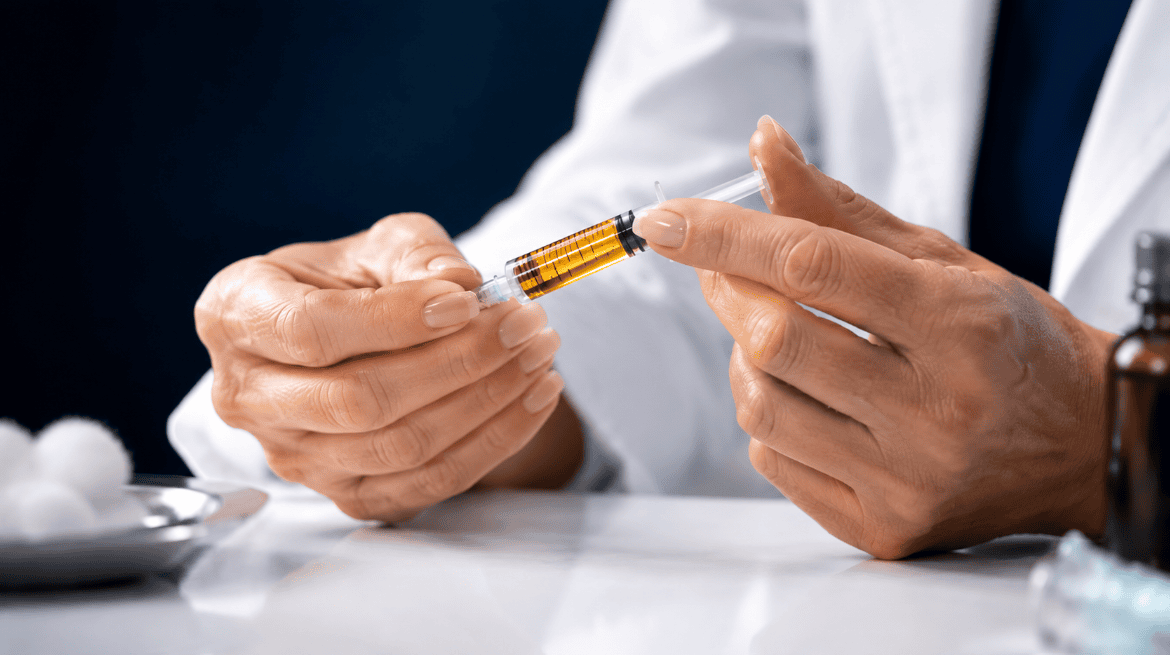
How Long Does It Take to See Results From PRP Injections?
This is one of the questions we hear most, and it makes sense. When you’re dealing with pain, you want to know what to expect and when. So if you’re considering PRP injections in Tampa, FL, here’s a realistic, plain breakdown of what the recovery and results timeline usually looks like and the factors that can speed things up or slow them down.
A Quick Refresher on How PRP Works
PRP uses a concentrated sample of your own platelets, drawn from your blood, to support your body’s own repair system at the site of injury or degeneration. We’re not replacing tissue. We’re helping your body do what it already knows how to do, just with the right support behind it. That’s why results build gradually rather than show up overnight. You can read more about the procedure itself on our PRP page.PRP page
The General Timeline: What to Expect Week by Week
Every patient responds a little differently. But here’s the general pattern many patients go through with PRP.
Week 1 to 2: Initial Inflammation Phase. It’s common to feel some soreness, mild swelling, or even a little more discomfort right after your injection. That’s normal. PRP works by triggering the body’s repair mechanisms at the treatment site, so some reaction there is actually a sign the process has started.
Week 3 to 4: Early Improvement. Many patients start noticing subtle changes around here: a little less stiffness, a slight dip in pain. This is often when the regenerative process starts to become noticeable, though it varies depending on the condition.
Week 6 to 8: More Consistent Progress. By this stage, patients typically report steadier improvement, especially with spine-related joint or tendon involvement. This is also a natural point for your provider to reassess and talk through whether additional sessions make sense.
3 to 6 Months: Continued Healing. Tissue healing takes time, and many patients keep improving for months after treatment. That’s especially true for more involved cases, like the ones we address through our regenerative medicine options.
Factors That Influence How Quickly PRP Works
No two patients heal at exactly the same pace. A few things that shape your timeline:
- The specific condition and how long you’ve had it
- Your overall health, age, and activity level
- Whether we’re targeting a joint, tendon, or spine-related issue
- How closely you follow post-treatment guidance
- Whether PRP is combined with other therapies, like BMAC or MLS Laser Therapy
When Should You Expect to Talk to Your Doctor Again?
We don’t send you home after your injection and hope for the best. That’s not how we work. Follow-up is part of the plan. It’s how we track your progress and adjust course if something needs adjusting. Your plan should evolve based on how your body actually responds, not stay fixed on a generic timeline. That’s the whole point of a personalized approach to chronic pain.chronic pain
Is PRP a One-Time Treatment?
For some patients, one session is enough. For others, especially with more advanced degeneration, a series of injections gets you the better outcome. Research into regenerative treatments like PRP, according to the National Center for Complementary and Integrative Health, is still evolving, and results vary by individual and condition. There’s no single timeline that fits everyone. That’s why a real conversation with your provider matters more than a generic promise.National Center for Complementary and Integrative Health
What If You’re Not Seeing the Results You Expected?
If your progress feels stalled, or you’re not seeing what you hoped for, talk to your doctor before assuming PRP simply didn’t work. Sometimes it means adjusting the plan, adding a complementary therapy, or taking another look at the original diagnosis. Being willing to reevaluate is part of what makes a treatment plan trustworthy. It’s always reasonable to ask about a second opinion if you want more input.second opinion
Frequently Asked Questions
Not usually. Mild soreness in the first week or two is common as your body starts its healing response, with more noticeable improvement building over the following weeks.
Depends on your condition and how your body responds. Some patients see real improvement after one session; others benefit from a series spaced a few weeks apart.
Most patients can resume light activity fairly quickly, though your provider will give you specific guidance based on the area treated and your overall health.
Results vary by patient and condition. PRP is one option among several regenerative and pain management therapies, and your doctor can help determine if it is the right fit for you.
Your provider will typically track your progress through follow up visits, comparing your pain levels, mobility, and overall function over time to determine whether the treatment plan is working as expected or needs to be adjusted.
Talk to Our Team About Your PRP Timeline
Every patient’s healing looks a little different, and that’s exactly why we take an individualized approach at DR2SPINE. Care is guided by Myrdalis Díaz-Ramírez, MD, who brings experience in minimally invasive spine surgery together with a full spectrum of regenerative and pain management therapies. That experience lets her set realistic expectations from day one and adjust your plan as your body responds.
If you’re considering PRP, or want to understand what results might look like for your case, learn more about our approach on our About page.
This content is for informational purposes only and does not constitute medical advice. Individual results vary. Please consult a qualified physician to discuss your specific condition and treatment options.
